The Story
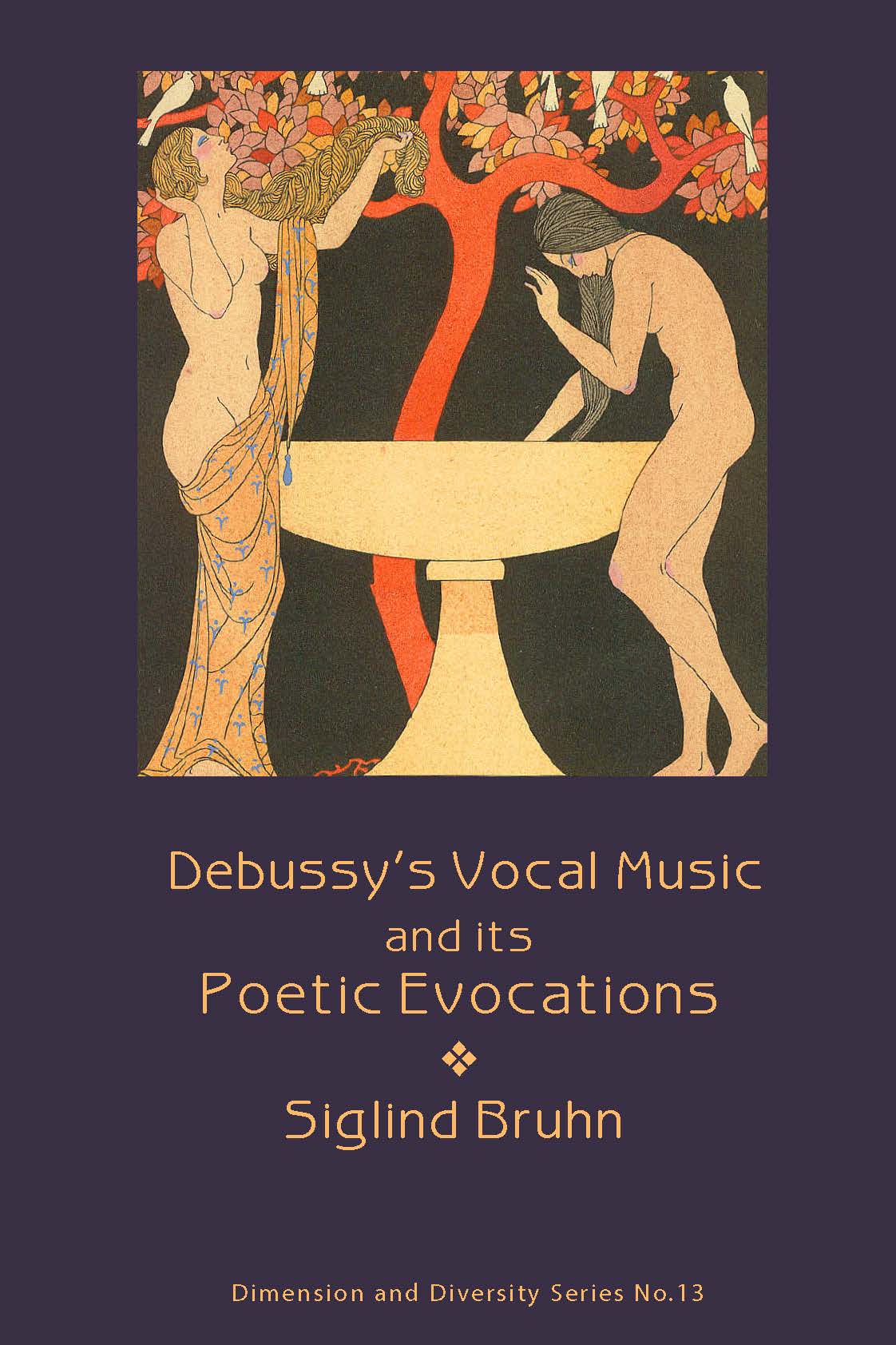
Claude Debussy, an avid reader of contemporary poetry, became a member of these circles when still in his early twenties. While as a student at the Paris conservatoire he had primarily set texts by poets from the generation of his parents and grandparents, he now turned to the lyric works of his contemporaries. The vocal cycles he composed in the course of the 30 years between 1885 and 1915 trace the path of his compositional development, which particularly since his encounter with the poetry of Paul Verlaine was defined by the quest for liberation from conventions handed down for too long.
This book, the first of two intended complements to Images and Ideas in Modern French Piano Music (Pendragon Press 1997/2010), offers background information, analyses, and interpretations of his seminal cycles for voice and piano – Ariettes oubliées (1885-1887), Cinq poèmes de Charles Baudelaire (1887-1889), Trois mélodies de Verlaine, (1891), Fêtes galantes I + II (1891-1892/1904), Proses lyriques (1892-1893), Trois chansons de Bilitis (1897¬1898), Trois ballades de François Villon (1910), and Trois poèmes de Stéphane Mallarmé (1913) – complemented by the cantata La damoiselle élue (1887-1888) and Debussy’s only completed opera, Pelléas et Mélisande (1902).
Siglind Bruhn, born in Hamburg and with a Ph.D. from the University of Vienna (Austria), is a music analyst, concert pianist, and interdisciplinary researcher. Since 1993 she has been affiliated with the University of Michigan’s Institute for the Humanities, where she is responsible for “Music in interdisciplinary dialogue.” She is the author of more than 25 book-length monographs, most of them in the field of 20th-century music’s relationship to literature, art, and religion. In 2001, she was elected to the European Academy of Arts and Sciences; in 2008 she was awarded an honorary doctorate from Linnaeus University (Sweden).
Description
Claude Debussy, an avid reader of contemporary poetry, became a member of these circles when still in his early twenties. While as a student at the Paris conservatoire he had primarily set texts by poets from the generation of his parents and grandparents, he now turned to the lyric works of his contemporaries. The vocal cycles he composed in the course of the 30 years between 1885 and 1915 trace the path of his compositional development, which particularly since his encounter with the poetry of Paul Verlaine was defined by the quest for liberation from conventions handed down for too long.
This book, the first of two intended complements to Images and Ideas in Modern French Piano Music (Pendragon Press 1997/2010), offers background information, analyses, and interpretations of his seminal cycles for voice and piano – Ariettes oubliées (1885-1887), Cinq poèmes de Charles Baudelaire (1887-1889), Trois mélodies de Verlaine, (1891), Fêtes galantes I + II (1891-1892/1904), Proses lyriques (1892-1893), Trois chansons de Bilitis (1897¬1898), Trois ballades de François Villon (1910), and Trois poèmes de Stéphane Mallarmé (1913) – complemented by the cantata La damoiselle élue (1887-1888) and Debussy’s only completed opera, Pelléas et Mélisande (1902).
Siglind Bruhn, born in Hamburg and with a Ph.D. from the University of Vienna (Austria), is a music analyst, concert pianist, and interdisciplinary researcher. Since 1993 she has been affiliated with the University of Michigan’s Institute for the Humanities, where she is responsible for “Music in interdisciplinary dialogue.” She is the author of more than 25 book-length monographs, most of them in the field of 20th-century music’s relationship to literature, art, and religion. In 2001, she was elected to the European Academy of Arts and Sciences; in 2008 she was awarded an honorary doctorate from Linnaeus University (Sweden).